Fintech concept
for invoice management
Project
Upramp
Year
2024
Duration
2 weeks and then 2 months
Introduction
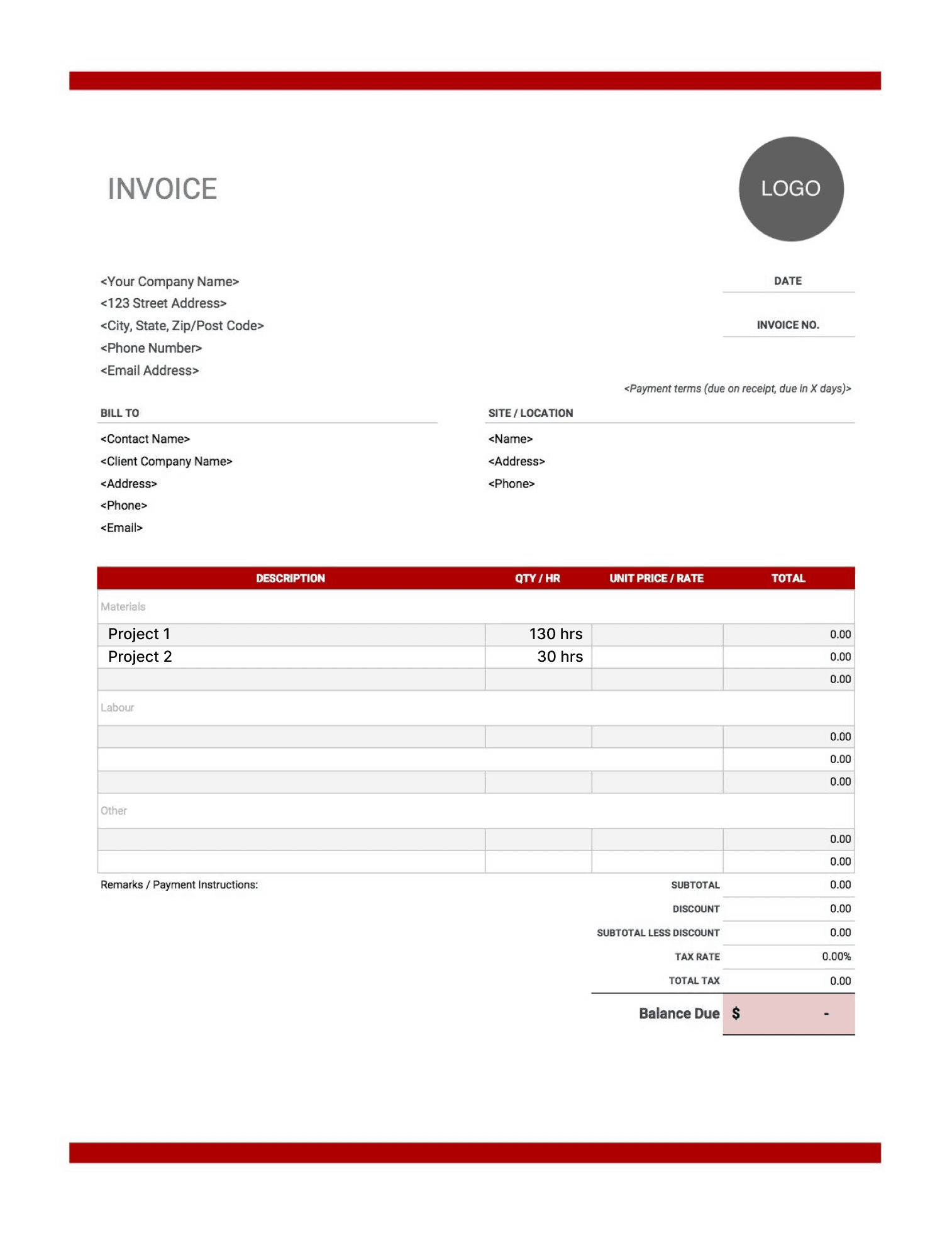
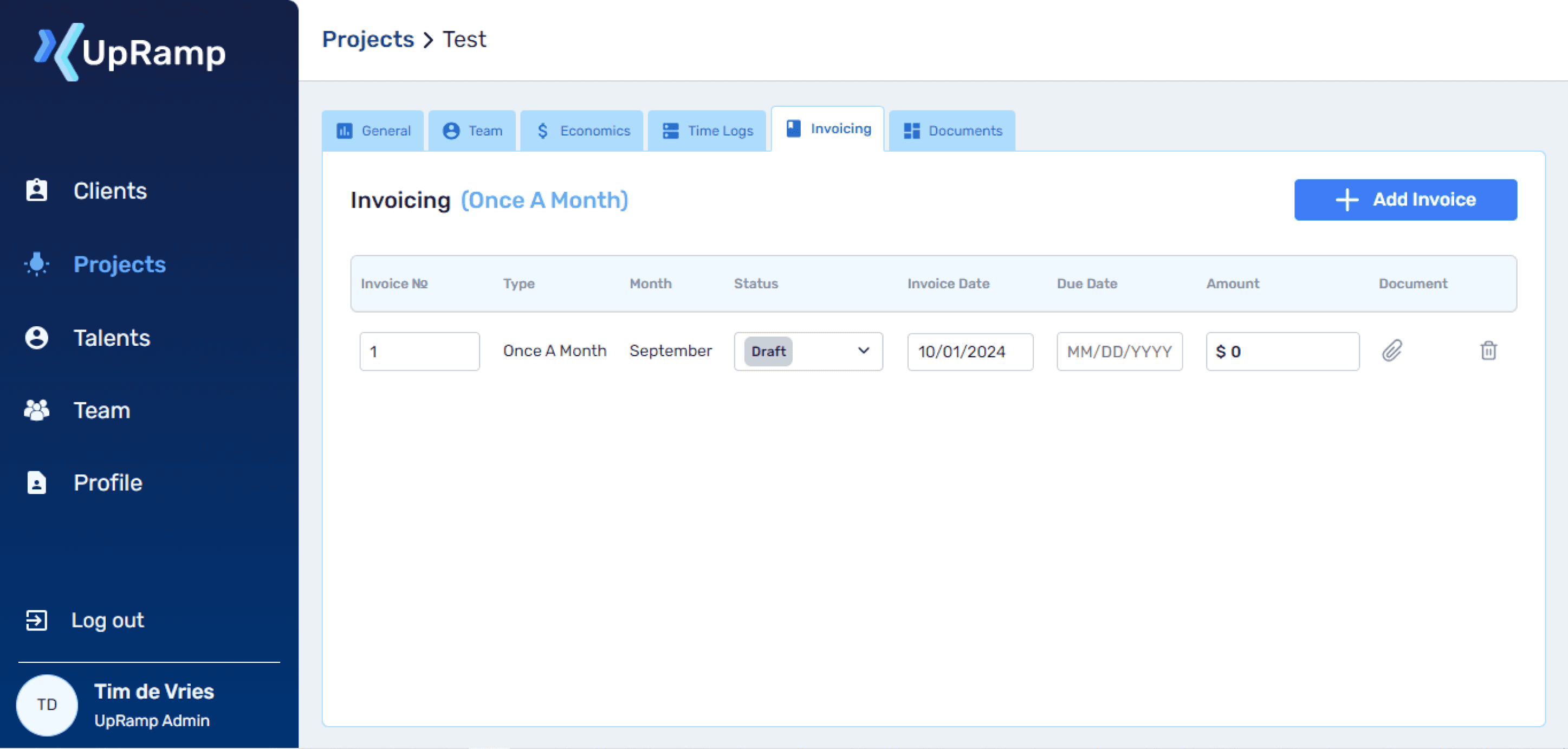
The customer owns a company where accountants use Google Sheets to invoice clients and employees, causing inefficiencies, data loss, and mistakes. The founder wanted to improve this process by creating a custom SaaS solution for internal use, with plans to sell it later. The client had previously worked with another studio but came to us after issues weren’t resolved.
Product goal
Simplify customer and contractor management, eliminating data inconsistencies, taking into account corner cases.
Pain points
Accountants call Google Sheets 'SpreadShit' because managing multiple disconnected spreadsheets leads to frequent data loss, inaccurate invoicing, and wasted time.
Main challenges
Coordinating a new international team that had never worked together.
Working with just 2 weeks before launch and only basic sketches to start.
Making sure the product design met the specific needs of accountants.
My role
I led the project by conducting in-depth interviews with accountants, performing a competency analysis, designing the MVP, managing the team, and presenting progress to the client. I ensured all stakeholders were aligned and the product solved the actual pain points
My actions
Analyzed the existing product and identified areas for improvement.
Analyzed how similar products solve the same problem.
Conducted in-depth interviews with accountants to understand their workflow and pain points.
Designed the key user flows to optimize invoice management.
Weekly syncs with accountants and clients to ensure continuous feedback and improvement.
Focused on designing the interface to be Jobs-oriented to increase task efficiency.
Introduced multitenancy and added features to handle partial payments and overpayments.
Managed the team to ensure everyone stayed on track and met deadlines.
Conducted QA to ensure high-quality deliverables.
1
Problem
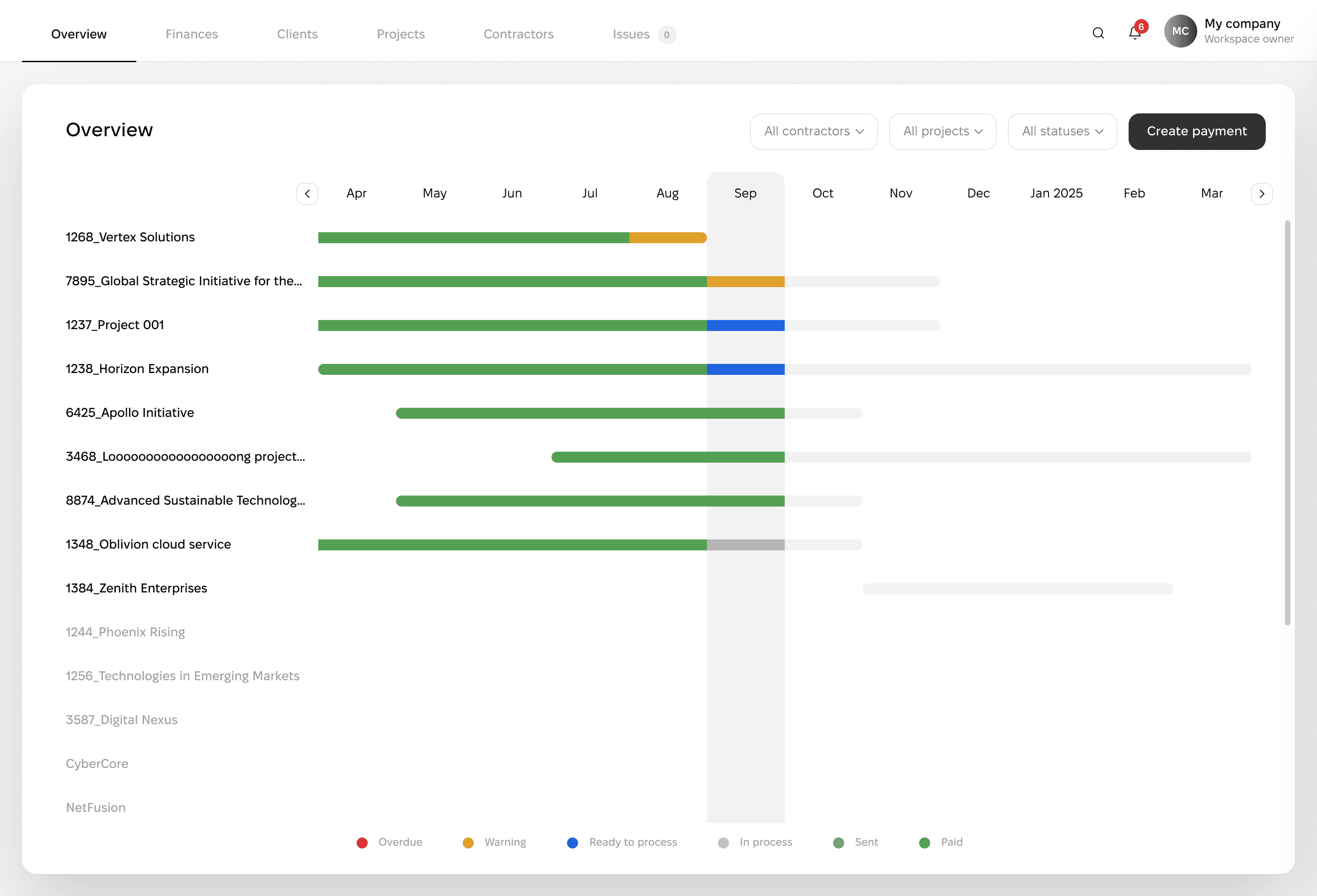
Lack of project status visibility
It's hard to gather all information in one place and know at a glance whether everything is okay.
Solution
Gantt chart
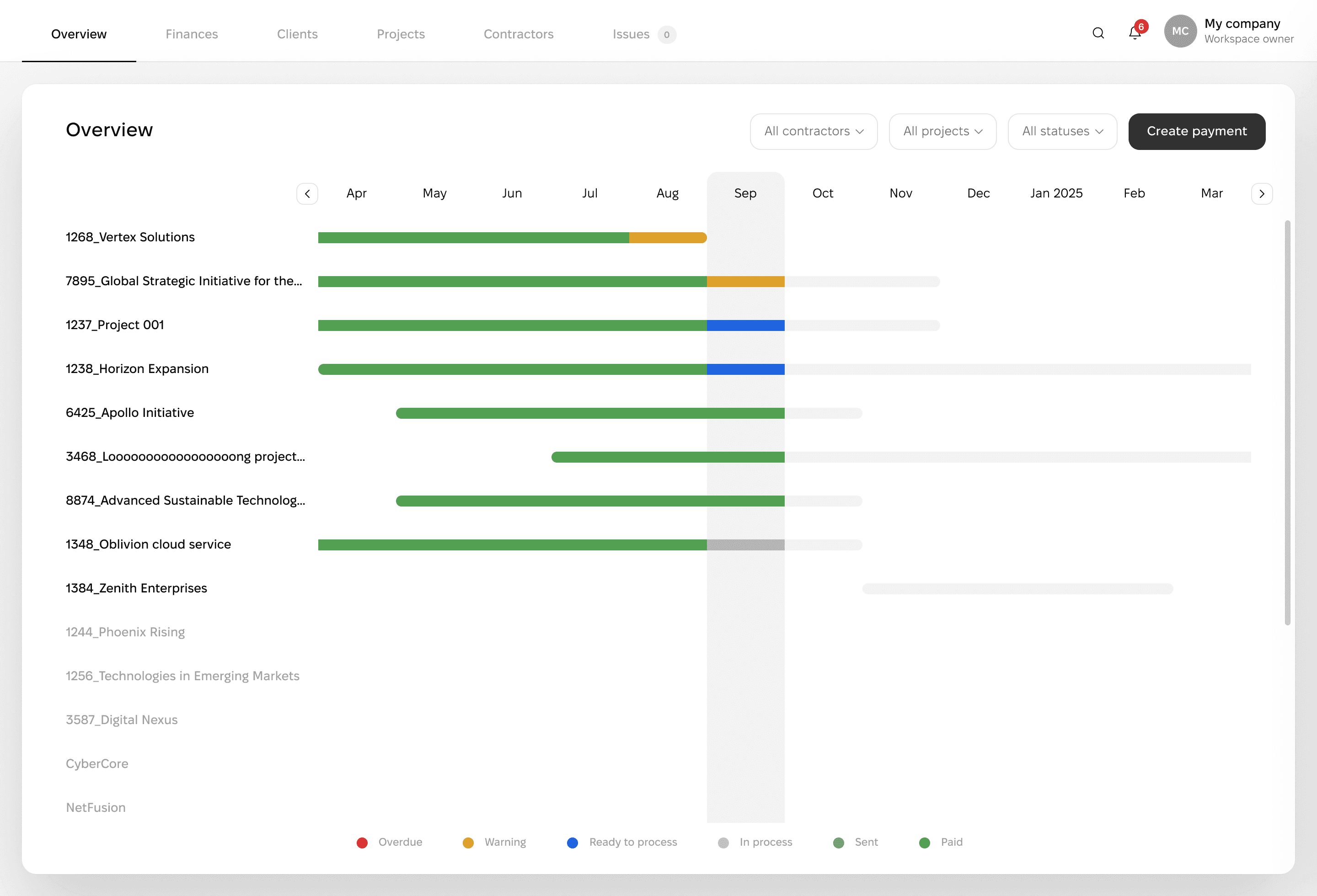
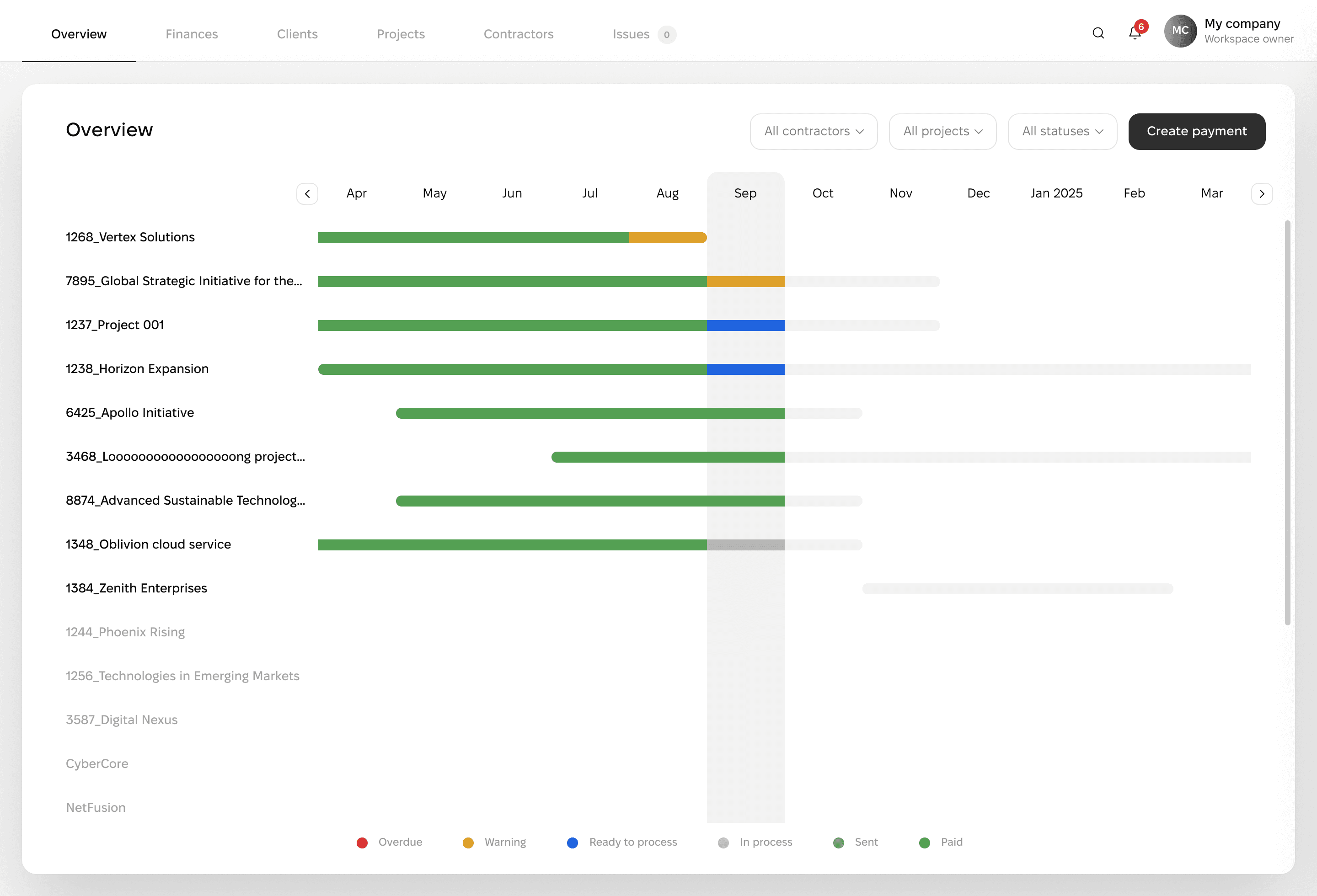
A Gantt chart was added to allow accountants to easily visualize the status of all invoices and projects, improving tracking and reducing errors.
2
Problem
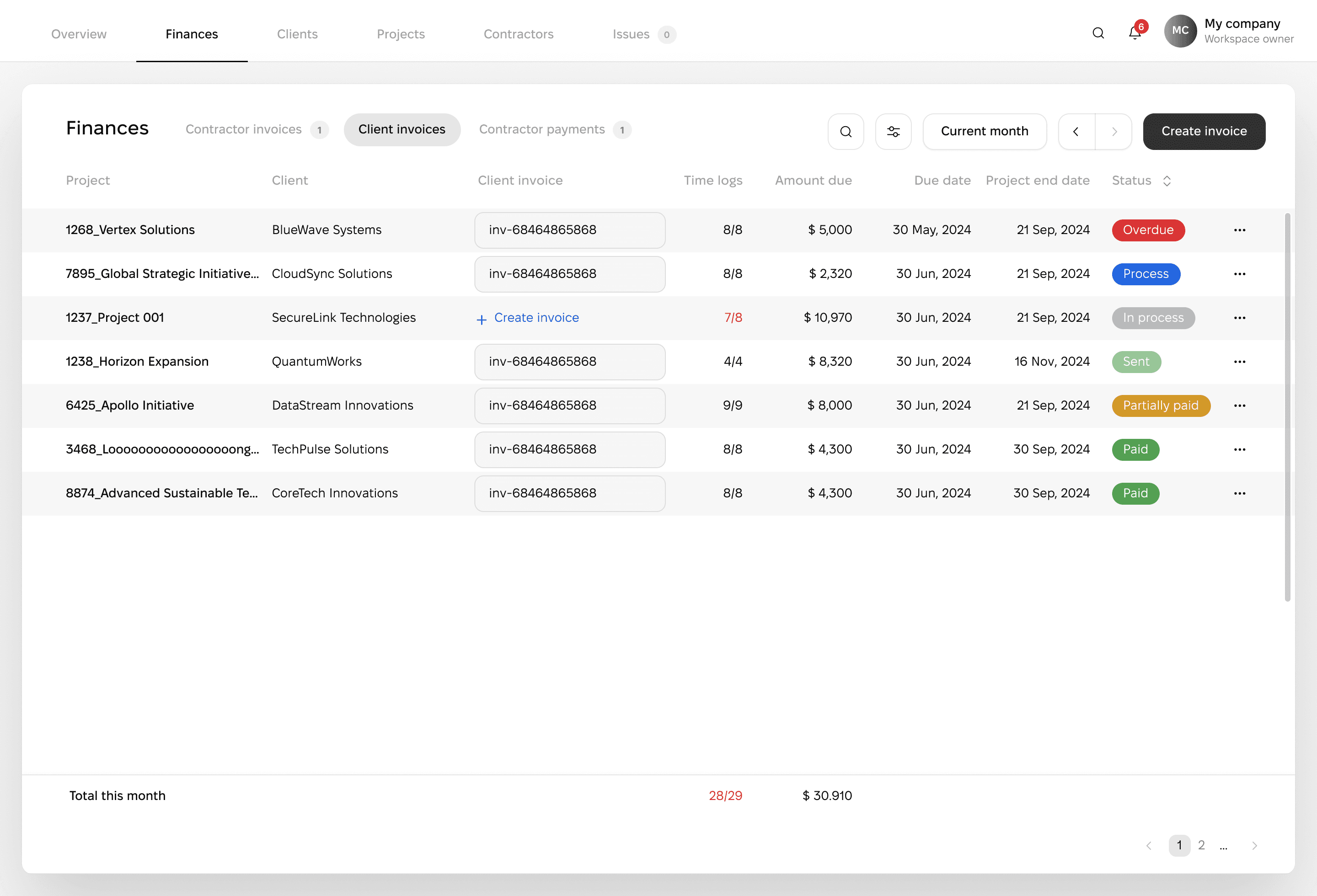
Mixed invoicing for clients and contractors
Accountants invoice clients and contractors differently. Therefore, this solution does not help accountants do this more efficiently, but makes the process even more complicated.
Solution
Separate tabs
Created dedicated tabs for contractor invoices, client invoices, and payments to streamline workflows and reduce confusion.
3
Problem
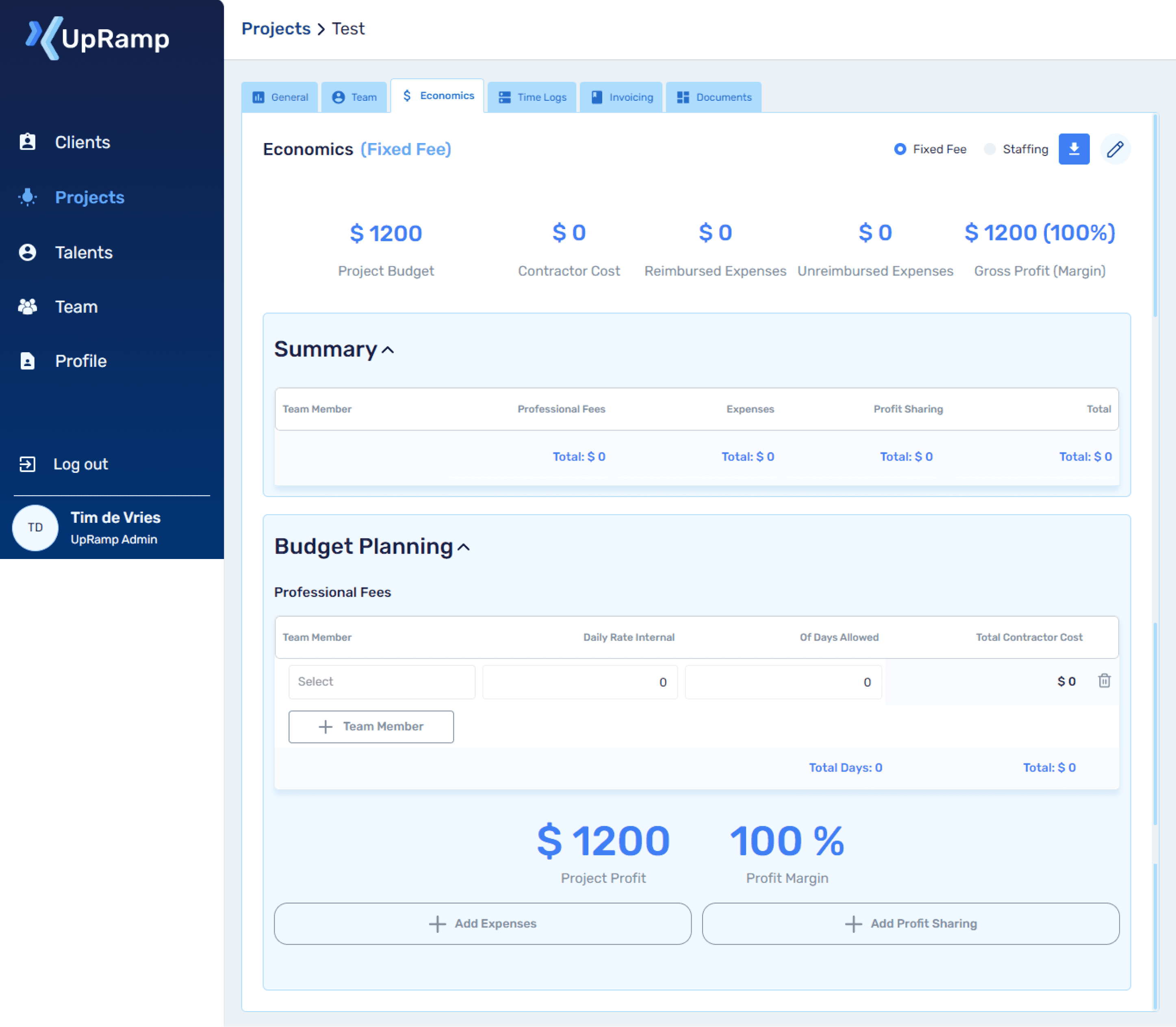
Difficult to plan project budgets
The calculations do not give an understanding of why they are so and what to do about it.
Solution
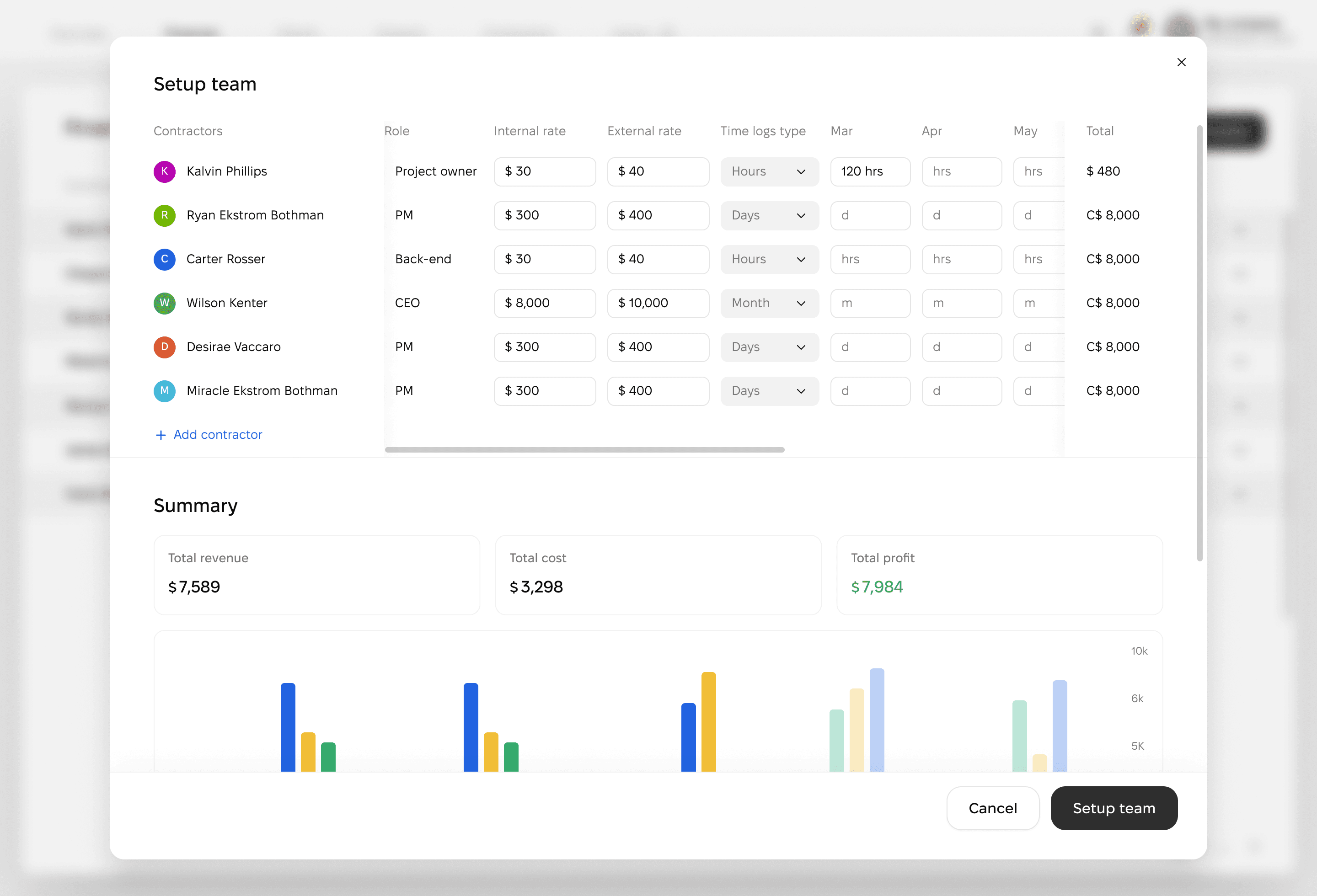
Simplified Budgeting
Before starting a project, you want to know if it will be financially successful. Since most costs go to the team, we suggest simplifying the process by entering contractor costs, hours, and the project budget. This helps you quickly understand the project's profitability without extra details.
4
Problem
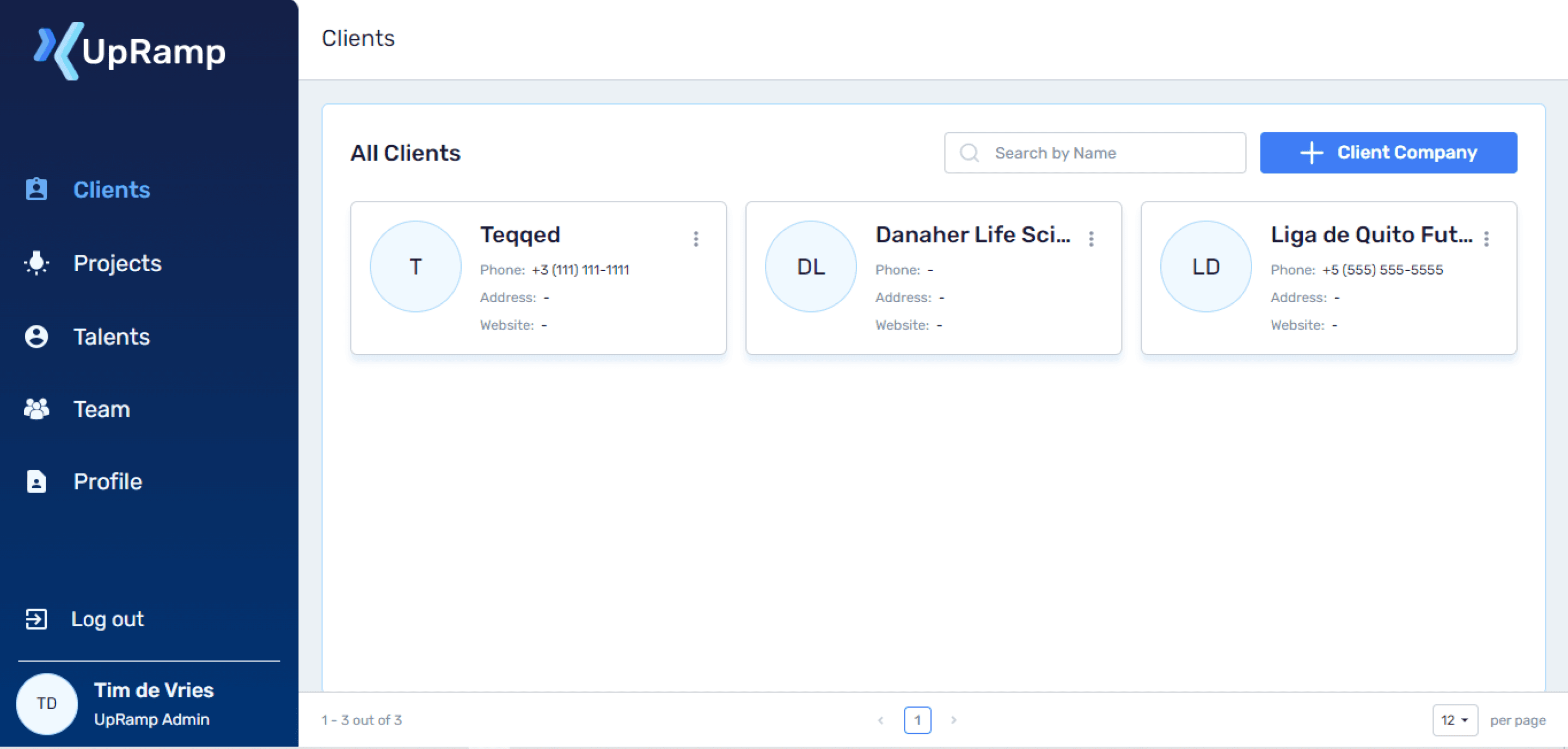
Single-user account structure
It is not a scalable solution.
Solution
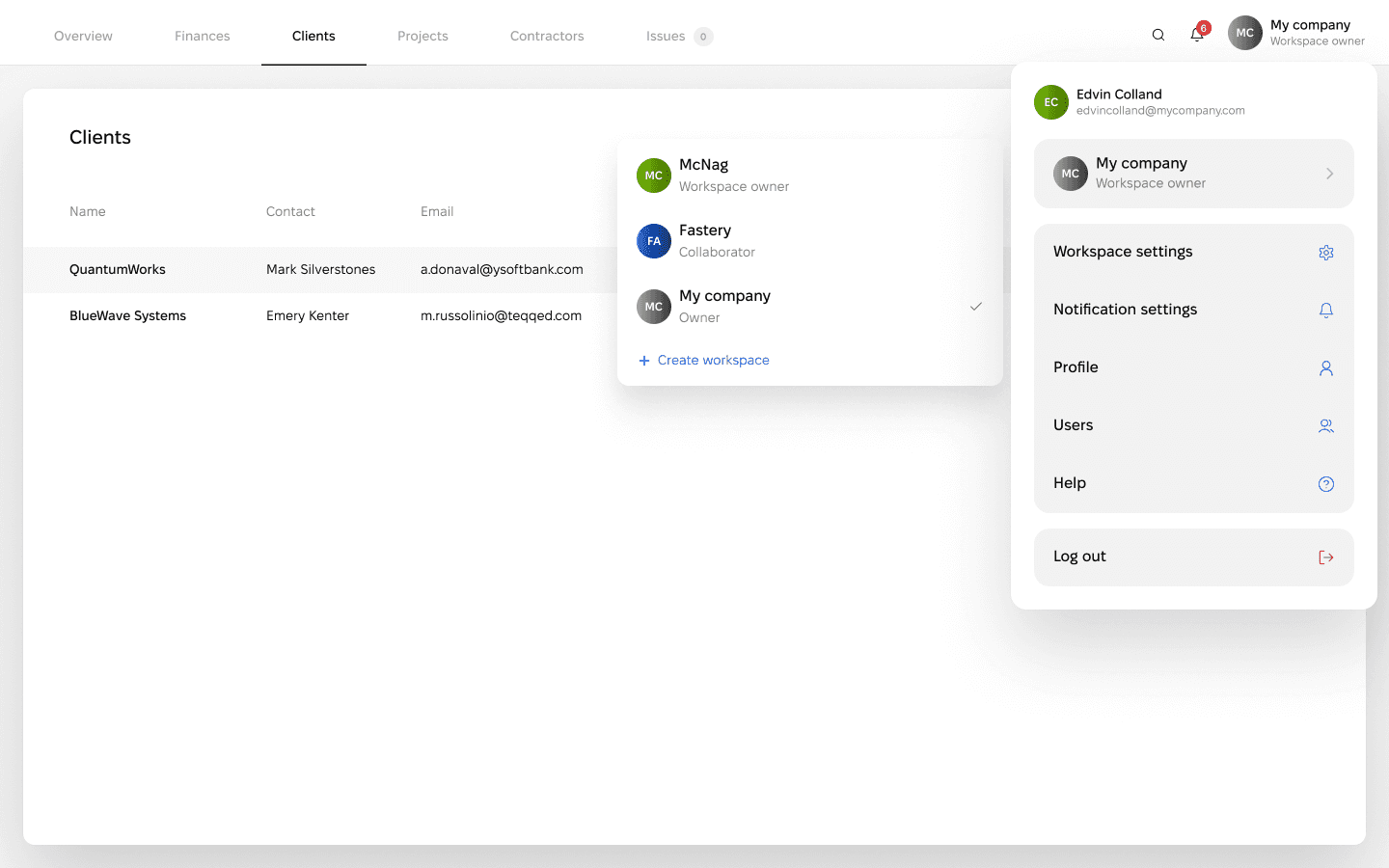
Multitenancy
Implemented roles for owners, managers, accountants, and contractors to allow multiple users and scale the product.
5
Problem
Manual data entry
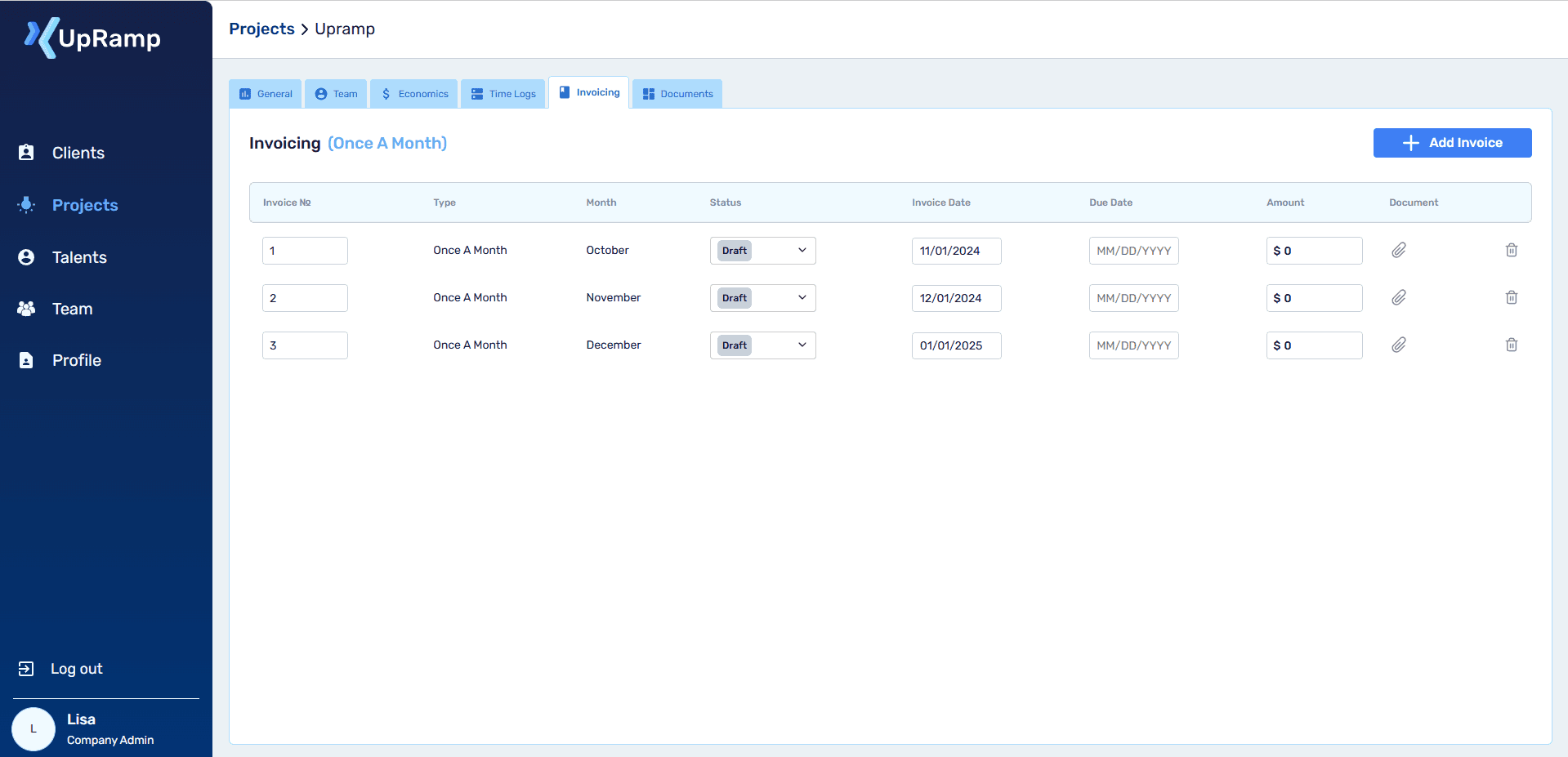
There is no automation. Information about invoices is not linked and everything must be entered manually.
Solution
Automation
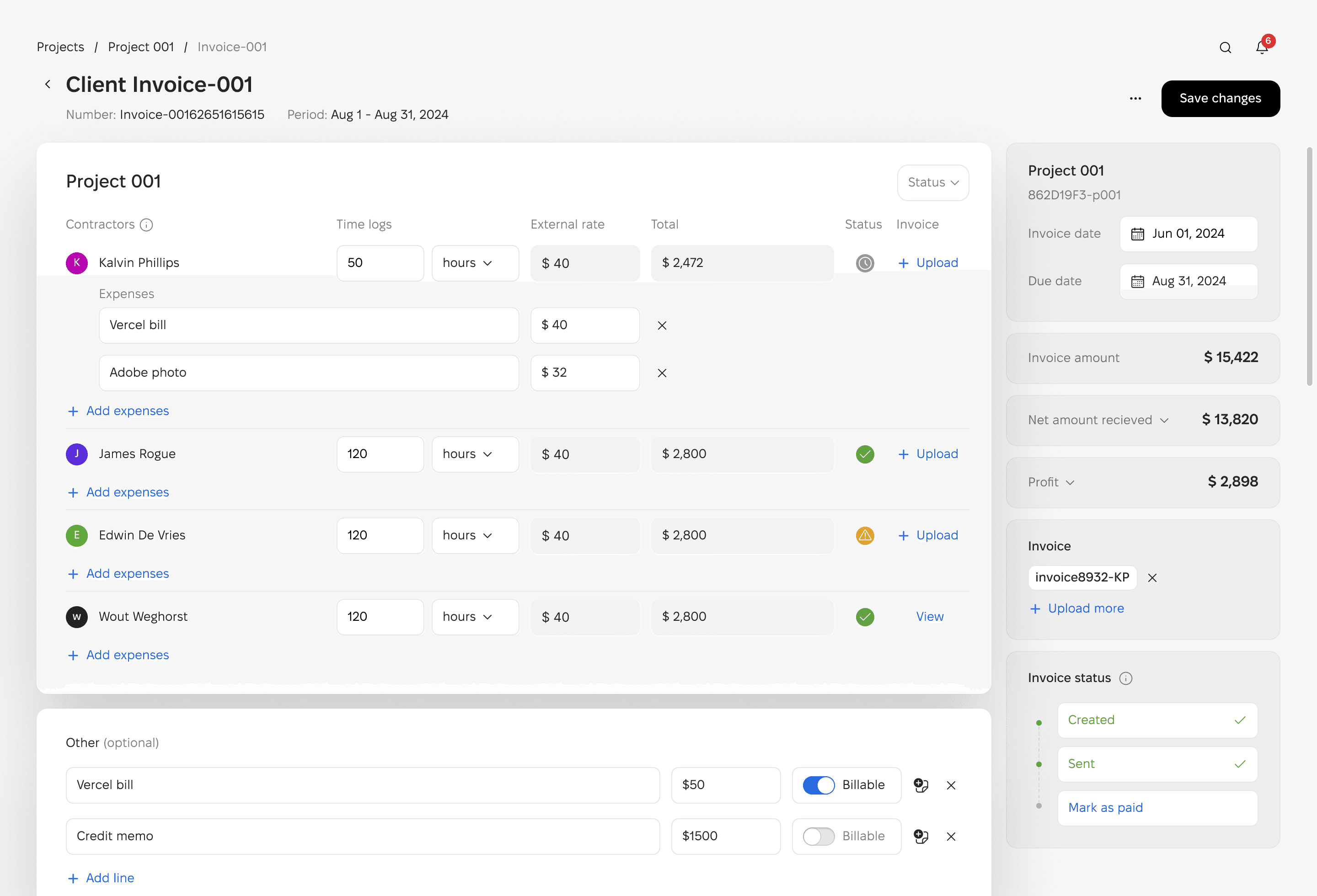
Implemented data linking and automated workflows for invoicing, reducing the need for manual input and minimizing errors.
Final design
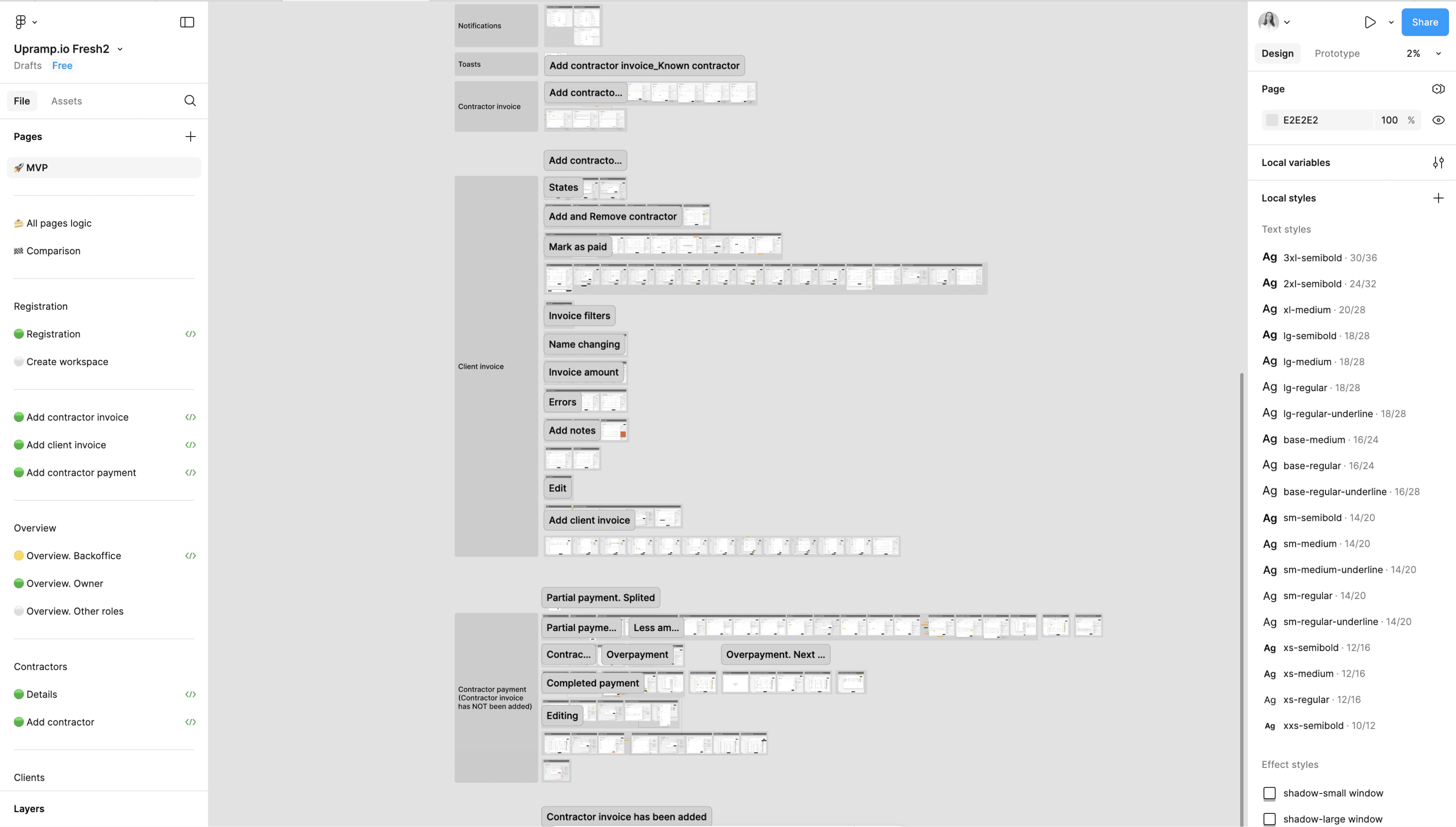
How working file looks like
Result
I combined insights from user research and previous product evaluations to create a refined MVP.
Simplified the main features of the project and cut it down to the MVP stage
Worked closely with stakeholders and developers
Presented the project to the client